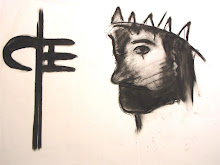
unresponsive parents and afterwards the ontology 'I don't exist'
the inertia of the damaged object -- clinging to this ontology
episodic insight vs. real personal transformation
then: working through
the neutral citizen is in fact the bearer of a coded identity
an implicit ontology -- the inertia of existing power structures
token inclusion vs. real inclusion in power structures
then: societal change
oppression by virtue of membership in a social group
then: integration, inclusion
but: are we erasing what bothered other people?
and: where to be oneself and where to belong
thus: divisions in the ontology of the self
let us not look for people who are like us
let us look for people who share our values
identity politics vs. value coalitions
a demographics ontology; a voluntarist ontology
the self -- constructed by opposition to the other
the self -- reinforcing wounded attachments
the self -- constructed by dramatizing its pain
this is the ontology of the victim
humanism -- the universal human ontology
posthumanism -- deprioritizing shared characteristics
seeing who we are vs. choosing who we are
facticity vs. projected ontologies
Foucault: the aesthetics of the self
The self as a practice of austerity
Tuesday, August 23, 2016
Friday, August 12, 2016
projects august 2016

some current projects
teaching this year in the philosophy department at PSU
atheism
cyberethics
the philosophy of education
science and pseudoscience
humane computation
untitled project
theory of the red herring
thoughts for the day:
"It is essential that public opinion should be enlightened. If the nation expects to be ignorant and free in a state of civilization, it expects what never was and never will be." -- G. Washington
"Education is the most important subject which we as a people can be engaged in." -- A. Lincoln
Friday, December 4, 2015
current problems
I'd been battling with my friend Peter Boghossian about comparing philosophy to a game and about positivism and resisting a scientistic model of philosophy.
I've
been teaching labor history and critical accounts of economic rationalism --
also about sex, culminating in a panel discussion about sex-role stereotypes in
society -- Foucault is a huge influence for me in understanding the Greeks and
bringing a Greek mindset to the present.
I've
been studying Sartre's The Idiot of the Family, Husserl's Cartesian Meditations
and Lacan -- working with my colleagues in Montana.
---
Three
last posts on philpapers -- talking with Derek Allan in Australia and Karen
Elizabeth Zoppa in Winnipeg/Manitoba:
---
Hi
Derek and Karen
If you
don’t mind I will go on with the conversation and try to address some of the
big issues we have been thinking about.
--
I am
surprised to learn that science is uninspired by the highest values especially
on the hundredth anniversary of the general theory of relativity.
As
philosophers I think we must make common cause with everyone who has the
strength of mind to break free of convention and establish truth on the basis
of sound evidence, rather than airy speculation or dogmatic belief. We
need not protect philosophy from the incursions of other fields, especially
from empirical science. New forms of reductionism and logical positivism
and new ways to see big data and big complexity -- new forms of skepticism
about big explanations too -- bring it on -- encourage scientific investigation
and every form and elaboration of natural and human
art-science-technology-skill. We still have to encourage people to learn
and add to the store of understanding. Philosophy is an advocate for the
cause of learning and certainly for scientific discovery. Wake up and
smell the science!
Einstein
once said that the man of science is often a poor philosopher.
Philosophers likewise are often poor scientists -- Aristotle makes huge
mistakes such as rejecting the atomic theory, the theory of evolution,
heliocentrism. Yet Aristotle is a towering philosopher and scientific
spirits such as Frege, disastrous philosophers, make huge advances.
Welcome
to planet earth. We have left and right and lots of problems with
integration. What is the special role that philosophy should play?
--
When I
first started teaching philosophy in the 1980s I was very conscious of the analytic/continental divide in the background. I was interested in
thinkers from both traditions, and also from other traditions -- Chinese
philosophy, Indian philosophy, African philosophy, South American philosophy,
philosophy from Oceania -- but few people I met had the same inspiration for
philosophy as I discovered in myself -- I was also trying to keep up with my
mathematical and scientific education, and my studies of ancient and modern
languages, and studies in economics and social sciences -- trying to study the
large arc of history to see what may be gleaned for the good of society.
All of this seemed relevant and even essential to me, for anyone who wanted to
dig into philosophy in our time, with a world conception of philosophy and a
conception of a truly global (not parochial) process of scrutiny, including an
interrogation of the unremarked assumptions that attach to all our fields of
study, and even to cultures themselves -- if this is possible. I had some
hope but little evidence for any global convergence of philosophical ideas on
big questions, such as the primacy of free inquiry, a foundation in a
humanistic orientation, a final standard in empirico-deductive evidence, and a
clean break with the obscene prejudices of the past. It did not seem
possible to me that philosophy would continue on with its traditions of narrow
interest and specialty -- Kantians vs. Platonists vs. Russell or Popper or
German Idealism.
Some
thirty-odd years later for me, I see that the shape of philosophical
inspiration today is still very much along traditional lines. I do not
meet people often who have a passion for philosophy that resembles mine -- but
I do meet such people on occasion. Some of us try to look across many
traditions and fields, equally at home with history and mathematics. More
often I meet people who focus on one thinker or one strain in a single
tradition -- even young people just starting out in their studies, with
ambitions to become new Hume scholars or Platonists or Feminist
philosophers. Some of us see the analytic/continental divide but mots
people ignore it -- they just go on in their subfield without a grander aspiration.
My
long-term conclusion is that the subjects that occupy people in philosophy may
not be the point -- which would also make the traditions less the focus
too. Maybe the point is to develop a philosophical sensibility, a
sensibility to argument, to tracking down ideas to their root metaphors --
certainly including the important “scientific” value of the decisive import of
empirical evidence -- philosophy as an inspiration both for a welcoming
tolerance and a fearless skepticism.
If there are a
large number of philosophers worldwide who are not attuned to values like
these, then perhaps the platform for discussion should be -- what is
philosophy? -- why should anyone still care about philosophy? -- how can we
translate our personal philosophical researches into paths towards the good
society? How can we attack and help eradicate the very unphilosophical
disease of fanaticism that infects our societies? Philosophers should be
able to get together on the platform of intellectual freedom, tolerance,
empiricism, logic and ethical care. If we do not have this in common,
then ‘philosophy’ is no longer a good in the world, and we don’t need to worry
about it.
--
Derek
you accuse me of both asking and answering my own question -- which if true seems
out of sorts with the aims of philosophy -- philosophy should not perhaps ask
questions that it has already answered.
I
didn’t think I was answering a question -- just raising one. What is
philosophy? Since people go on pursuing projects like analytic philosophy,
continental philosophy, ancient philosophy, comparative philosophy … and since,
as your analyses point out, these projects are not aligned very well, perhaps
there is no common theme … perhaps they merely resemble one another in various
ways.
You
put my presumption to the test. I seem to be identifying ‘philosophy’
with the development of a critical mindset rather than a set of conclusions or
a focus on any particular problem. But suppose this is wrong: as you say,
let us look at the idea that ‘philosophy’ is not bound up with any of these
things -- intellectual freedom, tolerance, empiricism, logic, ethical care, and
the search for the good society.
Let us
try to imagine a kind of philosophy or an understanding of philosophy that does
not respect intellectual freedom. It forbids certain kind of
inquiries. Let us imagine a philosophy that is not committed to
tolerance. It is intolerant of difference across some boundary. Let
us imagine a philosophy that defies logic, ignores evidence, has no animating
moral purpose and no concern for society at all. What is left? I
don’t think we can call it “the fearless examination of arguments” if we have
already eliminated the very bases of argument in logic, empirical evidence, and
moral insight. I don’t think that we have “answered” the question about
philosophy by thinking about it in terms of reasoning, evidence and moral
compass. These are some of its internal components, its inner workings,
and whatever philosophy is will involve these things -- this seems right -- but
this does not specify what philosophy is, how it should be pursued or why there
are philosophies rather than one singular phenomenon that everyone will
see in exactly the same way.
Let us acknowledge
that there is more than one way to pursue this study -- philosophy. Then
perhaps we can get together as philosophers not on a set of conclusions but a
common commitment to values such as respect for basic logic, respect for
evidence, and respect for human beings.
--
Karen you raise the daunting question of
situating ‘science’ in some broader understanding or putting it to the test as
philosophy. You warn us I think that we may be using this word
uncritically and that we should be suspicious of purported “highest truths” --
for example in the case of General Relativity, whose centenary we were
discussing -- perhaps these highest truths are being used to prop up some
merely worldly power.
I started thinking about Heidegger’s critical
engagement and placement of science and technology in his big ‘history of
being’ -- a kind of golden-age theory about the development of philosophy --
this version of Heidegger is an “environmental philosopher” and predecessor for
environmental thinking by Leopold, Naess, Callicott and Hardin -- whose ideas
appear to underlie much recent and ongoing work in environmental ethics.
Heidegger correctly identifies human culture itself as the culprit in the drama
of environmental ethics. Heidegger inspires a number of attempts to
rethink human culture and to develop a new ethic to meet the challenge of the
deadly impact of technology on the environment. These attempts all
contain a ‘primitivist’ strain of thinking aimed at returning human culture to
an earlier and smaller footprint on the earth. Aldo Leopold’s conception
of “the Land Ethic” is an example of this ‘primitivist’ thinking. But
“the Land Ethic” and Heidegger’s earlier, pioneering ideas on this theme
envision a society at odds with free speech, a free press, democracy, the city
and all its problems -- an idyll from a dreamlike past.
In a sense Heidegger was able to articulate a
critique of science and technology because he had established a baseline in an
earlier preindustrial idyll of human quiet and humble dwelling in the house of
being. Heidegger jumps away from the present to this dreamlike past
and achieves a critical perspective on what’s going on right now.
Habermas envisions the ideal speech situation
which is an equal jump from the present to dreamlike future in which human conversation
no longer struggled with deception, coercion, or mere power lust over the
sincere pursuit of rational consensus.
Thus we can achieve critical perspectives on
the present by looking ahead and before -- perhaps we cannot achieve
a critical perspective and remain in the present as actors -- our
criticism, that is, is blunted somewhat by our being situated in the same world
we are surveying.
To the critical engagement with science and
technology and all the problems that seem to be plaguing us at this moment of
history -- especially the plague of violence, and religious
fanaticism, and religious intolerance -- versions of secular fanaticism
and intolerance are also in no short supply. In truth I feel
incredibly small and powerless in the face of these enormous forces of history.
I am so filled with anger about the time I’m living in and the outrages
that the human spirit has to suffer that I can hardly walk and chew gum at the
same time. But I am also living as a philosopher. I’m trying to go
on with these questions. If I’m going to engage with science -- if I
can figure out what that is -- and critically situate it in a broader context
of ideas, then I must do so from a philosophical perspective. So my
question to you Karen is: what is your philosophical perspective?
Thursday, November 12, 2015
Note on Husserl
Husserl shows why all fields have a conundrum about foundations
and indiscernibles at the origin.
It is because intellectual constructions first emerge naively in the
already-made world preceding the act of reflection. The already-made is also the cultural root out of which all examination grows -- ultimately the most basic indefinables are performances rather
than ideas -- the "basis from which."
Radical subjectivity tries to get behind this untutored positing -- radical self-investigation is universal self-investigation -- so we try define more narrowly world, time, space, psyche, organism, culture -- perhaps to rid ourselves of these beginnings and replace them with scientific precepts. But to get to this intrinsically first being, we have to face the deep problems of what it means for something to be an accident -- we have to face fate and death and the meaning of human life -- we have to inquire whether it makes sense to distinguish a "genuine" human life from human life just by itself -- in brief we have to confront all the traditional "ethic-religious" problems -- which is why a truly phenomenological investigation must be an all-embracing self-investigation (Cartesian Meditations, § 64).
The big problems are inside, in the concepts we use -- the
handhold system, upon which we build our sciences -- the truly Cartesian
reflection will take this final jump -- this is a jump into the world we live in and in which we face the problem of orienting ourselves in a positive sense of life-meaning -- a sense of our own responsibility -- thus to lose the world by suspending our judgments about it, and to regain it by self-examination. Thus at the end of his long series of experiments in the Cartesian spirit, Husserl comes back to his initial idea -- Turn back into yourself: truth dwells in the inner man -- know thyself!
usserl shows why t
Sunday, August 16, 2015
mind maps
My themes in recent years
have been the complexity of the ‘I’ and ideas about psychological integration. I have tried to understand something about
the mind’s construction of the world, and about what the individual can do to
take power and determine the meaning of things on one’s own-- to see what there
is, and what to do.
The big outlines of my
studies have to do with “mind” and also with “society”-- the mind as society,
and society as a kind of mind -- looking through different categories across
boundaries of self/other and home/alien and unconscious/voluntary -- in all
cases trying to make some maps of
these territories, which I call mind-maps.
There is a great deal of
work being done in this arena in current thinking -- the Canadian thinker Paul
Churchland for example studies the impact of “social-level institutions that
steer second-level learning” -- this gets him to the idea of “situated
cognition,” an idea that connects the origins of language in human prehistory,
and ideas about neurological evolution, to large systems of “nested regulatory
mechanisms” such as language, oral tradition, written records, legal systems,
schools, libraries, universities and research institutions -- this “epicerebral
process” represents a constraint on action and thus a new formula by which to
propose new initiatives. Churchland sees
that the underlying picture this view develops is Platonic: the physical brain
captures a landscape of abstract universals -- form precedes experience -- reality
as something humans ‘experience’ is constructed in social space, which itself
develops over time from prehistory to today, fashioning new tools and groups and
growing into something new by a social dynamic.
In my most recent work
“Criticism and Healing,” I look at what we can learn from studying historic
ideas of mental illness and different conceptions of what it means to “put
oneself back together” after having fallen apart. Here are a few excerpts:
“For the last several
months my research has focused on the relation between criticism and healing.
More specifically, I've been looking at critical partitioning in relationship
to therapeutic strategies. Put
differently: I have been looking at various kinds of mind maps and various
opportunities for self-regulation that they suggest. The key problem of psychological integration
varies with, must adapt to, and is empowered by the elements we identify as out
of sync and needing integration. Thus we
can learn something from looking into this distinction and its development
through history.”
“The “mind” is what the brain has developed in contact with the world,
and in social life, in a complex and nuanced interaction with itself, as a
strategy for survival or as a way of equipping itself to survive. It does not seem possible that the region of
the brain that is most involved with speech would not be deeply integrated with
structures involved with social behavior as well as memory and imagination, in
wildly different degrees and circumstances.
The idea of response or of the
whole being reacting to its environment and exploiting resources at hand to
try to survive and flourish -- which we can see in much simpler cases -- is
what we are trying to say with the word “mind.”
The mind is what the brain does, and the brain is doing so much, and is
interacting so powerfully with other brains, in so complex a form, that we have
so much to look at when we start thinking about consciousness. My idea here is simply that the basic
functions -- such as seeking, fear, rage, surprise and play -- in interactions
with each other and in society, constitute what we call mind.”
Greek maps
“Aristotle is an important source for the idea that creativity is
bound up with passionate, violent emotions that break through social
conventions; that forces deep in the soul shove themselves forward and upend
morals; that we can measure thought by emotion and get some practice doing it,
sometimes checking and sometimes encouraging desire, which builds up in us as
habits -- what Aristotle calls ‘strengths of character’ or ‘virtues.’
“Nietzsche takes a critical step beyond Aristotle in further reasoning
on the question, arguing that we harness the creative process by laying hold of
the impersonations one has already undergone and enacted in countless episodes
of social life; he argues that taking on roles in social life offers a
precedent for explicitly creating a persona
for oneself and acting it out; so that by conscious intention one may transform
oneself into one’s own explicit creation. He emphasizes that creative work
emerges out of a place where good and evil are still indistinct, but not
because self-creation is amoral; instead, because art tries to wrestle raw,
rude drive energies into an explicitly ‘created’ form.
Medieval maps
“In the medieval Morality play, we see Youth traveling on the Road of
Life, set upon by Temptation and encouraged by Wise Counsel. Our protagonist strays from proper guides
such as Simple Virtue or Godly Life, and begins to spend his time with Misrule,
Ignorance or All-for-the-money. Things
go downhill as Ignorance introduces Youth to Pride and Pride introduces him to
Lechery and Lechery at last brings him to Iniquity, typically through the door
of a tavern. Then Charity, reminding
the audience of the mystery of divine Grace, frees Youth from the influence of
Ignorance and restores him to the company of Humility. Thus we glimpse the profound change in the
underlying psychology in society in making the jump from the heroic ideal of
classical times -- a world of self-power -- to a new world of faith in which
the agent cannot extricate himself from the troubles of life on his own
initiative, but only by the grace of God …”
Biological maps
“The fundamental concept of mental health that seems to emerge in
these researches is complex; it is about exposure
to reality; it is social in nature -- it is a kind of growth via relation;
it involves replacing automatic responses with mindful responses (via social
resources we have a chance to isolate what is going on unconsciously within us
-- by means of social learning we get some handholds to bring more of the
automatism under conscious control -- ultimately to a new kind of unforced but
still thoughtful response). In this
sense Freud’s maxim that where Id was,
there Ego shall be is exactly right.
A
frequent metaphor from the new biological synthesis is imagining oneself as a
very small rider on top of an enormous elephant. This goes to the sense that we are much more
elephant than we are rider. At the same
time absolutely everything depends on the rider learning something about the
elephant, and gradually getting some control over the elephant. This is very difficult and should make us
patient with people who have some trouble handling their elephant. We get a chance to learn something from
experienced riders, and from people who spend their lives studying elephants,
and from poets, artists and philosophers who show us the elephant-struggle in
all its complexities -- but mainly we learn, and have to unlearn, from our
families, and from our struggle to get out from the closed world of the family
into the enormous reality that includes it -- which means that much is expected
of us -- healing is something we have to work for.”
Friday, February 20, 2015
current projects
Aspasia of Miletus (article to be published this spring)
Philosophy of religion -- Portland State University / Jan-March
Existentialism -- Portland State University / Jan-March
"Critique of Heideggerian Environmental Philosophy," Oregon Academy of Sciences / 2-28
"Theism, Atheism and Human Flourishing," George Fox University / 3-9
Ancient philosophy -- Portland State University / March-June
Criticism and Healing (draft underway for the 2015 EPIS conference)
Philosophy of religion -- Portland State University / Jan-March
Existentialism -- Portland State University / Jan-March
"Critique of Heideggerian Environmental Philosophy," Oregon Academy of Sciences / 2-28
"Theism, Atheism and Human Flourishing," George Fox University / 3-9
Ancient philosophy -- Portland State University / March-June
Criticism and Healing (draft underway for the 2015 EPIS conference)
Subscribe to:
Posts (Atom)