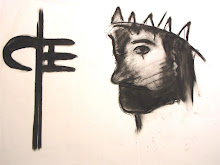
studying Karl Jaspers, General Psychopathology
January/ February 2024 / winter storm


Philosophy of the Dump / Dumpology
Commentary on the 2021 work
by the Canadian philosopher
Michael Marder
Hegel said that philosophy is its own time expressed in concepts. Heidegger held that every epoch coins its own word for Being. Marder notes that our word for being is dump; our own time is expressed in the concept: dump. Marder explores dump responsibility, dump care, dump meaning, meaning in the world of the dump. The new formulation of nihilism is to shit without giving a shit. In this capacity, polluted, we and the world perish together, categorized into nothingness. The Anthropocene becomes the epoch of dumping. Marder says the the 'we' he is talking about is the collective technobody. As it were, this conglomerate remains in the anal stage, creating excrement and still learning control -- emerging out of not giving a shit.
Marder says all this and more to set the stage for his question -- is it too late? -- it may be that the destruction wrought by the technobody -- its carelessness, its nihilism, its excrement -- is past the critical threshold. Societal growth takes time, yet we may not have any. This is urgent.
His ideas for positive steps: call it out, name it, attack it, clean it up. Marcuse: the power of exaggeration. Ramsey: the power of imagination. Intellectually and morally lazy people create and live in a world of shit. Every kind of crap floats up -- everything is coated with this shit in our very messy, foul, stinks-to-heaven world. This is the people who laughed at the crucifixtion. This is the people who salute their dictatators and gobble up their shit and spew it everywhere.
Some escape to minimize the effects of the dump, but the very force of existence has changed. The dump is everywhere, even in the high rise, the superyacht, the tax shelter, the country club.
What we dump in the Earth follows our metaphysics. We sought for eternal being, and now we have created an eternal nightmare. This is the nuclear waste, plastic waste, industrial, fossil fuel, globalized garbage dump -- the culture of porn and fake news and buy-it-now and shit on tomorrow. Ethnic cleansing, washing our hands, whitewashing, washing it away -- it just grows.
Perhaps we can finally reach parity when all of us are entirely and irredeemably coated in shit.
Note the disparity: the line I draw, the ideal line; the ideal of pure water, the water I drink.
The child makes its way past the anal stage by reinterpreting garbage as a gift that loving parents will welcome -- the child gets more control though nurturing encouragement than from being neglected or hectored and demeaned or ignored or smeared with its own excrement.
The dump implies: look what we have done, mommy! But also: God, look what we have done!
Remind, realign, reawaken, renew, recreate the transformation we must bring forth into a gift.
Heidegger imagined building, dwelling, thinking -- Marder observes the garbage dump -- we discover a retroactive self-definition for ourselves by the consequences of our actions. Is this what we have built? Is this where we dwell? Is this what are are forced to think by everything we see in front of us? The idiots assemble in the dump and laugh as everything gets smeared.
It is humanizing, humiliating to really see ourselves inside the mess we have made of the Earth.
It is dehumanizing to just stay here and dump more in and do nothing to clean up this garbage!
We have to exit the dump -- exit the cave -- climb up to see the light -- perhaps to find some insight -- in order to return and help clean up at least some small space in this enormous dark shadowy rank sick polluted and degraded world of the dump.

The Polish thinker Leszek Kolakowski is the author of "Husserl and the Search for Certitude" (1975) and "Metaphysical Horror' (1988) and "Modernity on Endless Trial" (1990) and "My Correct Views on Everything" (2005).
Kolakowski died in 2009. He was a Marxist and
an anti-Marxist; a positivist and an anti-positivist; a student of Kant,
Husserl, Heidegger, Wittgenstein - also a critic of all of them - storyteller,
treedom fighter, scholar. And: amazingly, he had a sense of humor. Here are a few of his key ideas, which speak to me in the present crises we are facing.
"A modern philosopher who has never once suspected himself ot being a charlatan must be a shallow mind and comeone whose work is probably not worth reading."
"Philosophy, once it appears, can never be done away with, no matter how often or how vociferously its futility is denounced."
"If existence were pointless and the universe were devoid of meaning, we would never have achieved the ability to imagine otherwise - or even to entertain the very thought that existence is pointless and that the universe is devoid of meaning."
"Among all modern thinkers, it is Karl Jaspers perhaps who deserves the highest praise, especially for his efforts at resisting so many things - he faced the demise of the Absolute; he resisted the temptation to make the self a god; he never fell into any cheap scientistic interpretation; he refused to accept mere empiricism, and held out for the importance of something beyond us that can never quite find its way into words; he took his Hippocratic oath seriously and tried to heal both himself and all the rest of us; and he kept returning to the idea that the search is what makes us human."
"It is impossible to grasp what is at stake in philosophy without diving into the problem of the criterion and honestly facing the questions that emerge from it."
"The cultural role of philosophy is not to deliver truth but to build the spirit of truth. And this means: never to let the inquisitive energy of mind go to sleep, never to stop questioning what appears to be obvious and definitive, always to defy the seemingly intact resources of common sense, always to suspect that there might be "another side" in what we take for granted, and never to allow us to forget that there are questions that lie beyond the legitimate horizon of science but are nonetheless crucially important to the survival of humanity as we know it."
"All the most traditional worries of philosophers - how to tell good from evil, true from false, real from unreal, being from nothingness, just from uniust, necessary from contingent, myself from others, man from animal, mind from body, or how to find order in chaos. providence in absurdity, timelessness in time, laws in facts, God in the world, world in language - all of them boil down to the quest for meaning; and they presuppose that in dissecting such questions, we may employ the instruments of Reason, even if the ultimate outcome is the dismissal of Reason or its defeat."
"We can escape the contradictions that emerge in our philosophical researches only by trying to place ourselves outside philosophy, to suspend our interest in the issues and to climb up to a vantage point from which philosophy itself appears as a part of the history of civilization. The trouble is, however, that to reach this point we almost certainly need philosophy - we need premises and conceptual instruments and much else that has been elaborated in the ambiguous realm of philosophy."
A quote from the Hungarian teacher and critic George Gamori about Kolakowski:
"This is the gist of his message: you cannot love both truth and authority. You have to choose, without dogmas, and oftentimes you must rethink things. This is a philosophy for real people - for adults."

Without assuming that I know very much about It, thought I would take a look at the the idea of responsibility. I am not saying that I don’t know what responsibility is, or that I myself feel no responsibilities, or that I have none. I am simply trying to assume as little as possible as a principle in inquiry. I will survey some of this vast territory and lay out any landmarks I can see.
Taking a look at the idea of responsibility is a way of getting at moral ideas – more broadly, investigating responsibility can be a way of looking at human being. Creating an idea and looking into it as a model for understanding ourselves – like creating a machine and then analyzing the way it works – these seem like basic human practices. We try to see ourselves via proxies – to see in the language of symbols and models – to unpack by indirections some of the dilemma of being a person.
Some phenomena in language
The English ‘responsibility,’ with a Latin root, shows up in French as responsabilité, Spanish responsabilidad, Portuguese responsabilidade, Italian responsabilità. The German term Verantwortung, literally, answerability, like the Danish answar, Estonian vastutus, Dutch verantwoordelijkheid – these terms are very close to the English liable, accountable, answerable.
It is important to see the idea through the filter of culture – so as not to overinterpret any one tradition -- also to open up to the variety of ways in which people get at this idea. The long Norman influence in Britain brings a legal vocaulary into English conceptions of morality -- right, duty, felony, leniency, tort, misdemenor, penalty, injury, liability, fault. The idea of legal responsibility is formulated as the obligation to answer for an act -- and to repair any injury caused by it. But then the state of being answerable gets gradually examined -- the idea of diminished capacity, or diminished responsibility, gets formulated. The doctrine of mens rea, guilty mind, the mental state accompanying a forbidden act, unknown to the Greeks, becomes standard in European traditions. This has the odd consequence of redefining a criminal offense as being accompanied by a requisite mental state. Then the mental state itself gets picked apart. It has to be intentional, knowing, reckless, negligent -- in 1960 the ‘Dusky’ standard emerges, defining competency to stand trial, and thus be held legally responsible, as implying a rational understanding of one’s acts, and the appreciation of basic facts, and the ability to assist in one's defense. Thus an insanity defense, or a defense based on being intoxicated or being in error, might mitigate the existence of a specific mens rea -- an insane person is said to be not mentally responsible or minimally someone whose responsibility is diminished, lessened, not fully assignable.
In Japanese there is the character tan (担), responsibility, literally burden, to bear, to shoulder, to carry – in this case, not related to the law. There is the character michi (道), responsibility, literally road, path, country lane, street; it can also mean God. The character giri (理), responsibility, literally counting, seemingly from ancient concepts of debt, being in debt, and thus being held accountable, being accountable. The idea of the moral burden is embedded in Bushido culture but dates from much earlier -- from ancient Japan -- probably from China and ultimately from Buddhism. The root sense is that of being bound. If you do not feel it, you are not bound. If you do feel it, you sense that your actions have consequences. You act now to discharge your obligations -- in fact, this is what you are. You are exactly what you show yourself to be in upholding your duty.
Among the Kwakiutl, everyone is entered into the ceremonial potlatch ritual beginning as a small child. You take on the responsibility to make an opulent ceremonial feast at which possessions are given away or treated as nothing to display wealth or mark one's prestige. In a context like this, you are what you give.
There are cultures in which the language of responsibility centers around money, sex, power. Responsibility can be an exchange; it can be reciprocity -- there is the Confucian ethic of social co-creation at an opposite pole of American individualism. If I can speak from my own background, as the child of Jewish parents who grew up in America during the Depression, the struggle to achieve economic success, and to demand high achievement from their children, informs what 'responsibility' means for me. So did my parents' deep commitment to democracy -- believing that "to whom much is given, much is expected," trying to instill a responsibility to "give back," to take part, to get involved in the world, to try to make the world a better place. A Jew is not supposed merely to be a human but to be a mensch, a good man, an upstanding person
In all these cases – the sense of being responsible, bearing your burden, playing your part, being held accountable, fulfilling your duty, giving back -- this can be everything one is.
At this juncture the evidence suggests that culture portrays the bind that defines human being in various different vocabularies. Let's just assume that there is no absolute way -- no right words -- no perfect or universal vocabulary to approximate this powerful concept. There's a long list of stand-ins -- many entries – metaphor after metaphor.
Though it seems obvious that some cultures appear to create a kind of obstacle course to trip a person up -- the sort of place imagined by Franz Kafka -- whereas other cultures create positive models for social cooperation (e.g., the Danish idea of hygge, conviviality, comradeship, comfort being together, which is explicitly taught in primary grades to inspire unselfishness) -- the very idea of setting up a hierarchy of moral systems is offensive – this is not an approach that earns much respect today. We should treat historical moral traditions exactly as we do languages, cultures, table manners, fashions in dress -- i.e., not by arranging them into a hierarchy -- but simply evidence of human diversity.
The American anthropologist Donald Brown documents the construction of the self as a responsible agent, the redress of wrongs, sanctions for offenses against the society, as basic human universals -- "features of culture, society, language, behavior, and psyche for which there are no known exceptions" (Human Universals, 1991).
Thus we have the universal binding tie, but at the same time the endless variety of cultural practice. There is no easy way to cut this down to size. But it is there in every corner of human space. It takes on different shapes.
A note on the law
Tracking the use of the term ‘responsibility’ in the law is helpful. The word seems to be used in two ways.
Responsibility is the obligation to answer for an act and to repair any injury caused by it. It is the state of being answerable.
At the same time, the term is used in expressions like responsible officials, responsible bidders, responsible agents. The sense here is that characteristic the absence of which would cause fair-minded and honorable people to doubt whether the matter in question is being managed in the best interest of the public.
Responsibility as obligation shows its close connection to standards of guilt rather than shame. Guilt attaches to a particular transgression; the offender expiates guilt through restitution, accepting punishment, apology, or some such gesture to reset the balance of justice. This is the ‘price’ – the Germanic stem guilt traces back to geld, gold – suggesting an economic subjection underlying later moral notions. Shame is the more narrowly moral idea – the primal shame accompanying body exposure is the archetype – the thing we are most ashamed of. But shame may attach onto virtually anything. I can be ashamed of my face, my body, my family, my background, my poverty, my race or religion or gender – my country or my political party.
Feeling shame seems to demand that the offender reform – not just redress; if I have done something shameful, there is no restitution to pay. Experience suggests that if I can make a person feel ashamed, then I have him under my control; in this sense, shaming is a strategic move in a struggle for power.
In talk about responsible people, this can mean two things – the ones to blame, the people who are guilty and should be ashamed; or people who act responsibly, who uphold minimum standards, people we can respect, people we can trust.
Some observations about the idea
Regarding the psychology of responsibility: the assumption of responsibility marks the beginning of adult life, exiting the world of the child still bound in the world of the parents. Yet the concept seems antiquated -- it sounds moralistic. It is basic to human psychology but still seems awkward.
Odysseus promises to come home and he comes home. He fulfills his responsibility. This was something he laid down. He means to do a thing and he does it. It is an act of will. Thus it is a human creation, an invention, a fiction. This gets at the awkward character in responsibility. The Greek scholar David Roochnik studies “responsible fictions” and concludes that, weak as they are, we can’t do without them. We have to do the best with what we’ve got (Responsible Fictions, 2007)
In the world conceived by natural science, every effect has a cause. The idea of responsibility seems awkward in part because it appears to defy the law of causation to magically transfer the agent to a frictionless world of free action. Binswanger captures the problem in his saying that our fates are determined by the forces of life, whereas we determine the forces of life as our fate (Sigmund Freud: Reminiscences of a Friendship, 1977).
Today the word ‘responsibility’ resonates with blindness to the circumstances of a person's life and the conditions that make it possible for someone to act autonomously – it’s a move in a power game – an attempt to direct public rage.
There is also a symbolic voltage in merely saying the word ‘responsibility’ in our epoch of history because so many people, in so many places around the world, behave so very irresponsibly in public, notably including the starkly bad behavior and the most degrading influence on public life in many decades -- the 45th President of the United States.
Notable on the current scene is the frequent attempt to evade responsibility. Political leaders try to escape responsibility, corporations try to escape responsibility – the church, Facebook, the W.H.O., legislators, candidates – entire countries -- everyone seems to want to deflect blame or to blame someone else. It is rare to hear anyone say ‘I was wrong’ – ‘I am the person to blame’ – ‘I take responsibility.’ The term ‘responsibility’ today has a very heavy connotation of being a burden or an unnecessary hassle or just a lot of useless baggage.
There is less a sense today than in generations past that taking on a duty is an honorable thing to do. Responsibility (in the sense of taking on an adult role) seems less important. Taking on a moral burden (and showing that you are capable of it) seems less urgent. Much of the veneer of supposedly ‘honorable’ duties has been stripped away. The concept has a weaker resonance in the wake of social changes.
Psychology generally seems less a force today in the way people try to explain the inequities in society. There is more a focus on economics. There is an insistent strain of determinism – people are less confident about being ‘free’ enough to ever be ‘responsible’ or act ‘responsibly.’
Another angle on responsibility comes from the idea of ‘earning it’ – the idea that no one is going to give you anything, and that you can’t count on people giving a damn, so that you have to dig deep and make something happen because you care about it. It’s up to you. The energy comes from you.
Another strain of meaning comes from the reaction to the prefab society into which everybody gets thrown – we didn’t choose any of this, but we have to deal with it.
Another angle is, ‘I didn’t have anything to do with this, but I’m being held responsible for it!’ – another is, ‘I’m not responsible for this mess, but I am going to try to do something about it.’
Wittgenstein gives us the term ‘language game’ – what we are looking at is the language-game of responsibility. Let us open up this game and examine its mechanics. Looking into these mechanics, we see an awkwardness, what looks like an impossible combination, a fiction, a power move, a blame game, a burden, a hassle, baggage, something one takes on -- the rules that you have to deal with, the way you see yourself, your reaction to the modern scene, your grit -- maybe your decision to drop this whole thing -- seeing yourself as caused, doomed, fated, finished -- language shows us all of this.
Some phenomena in folklore
The Eden story conceives the human condition in terms of responsibility – Eve’s sin – Homer explains the cause of the Trojan War in terms of responsibility – the Judgment of Paris, choosing beauty over power or wisdom – generally we see a magical background to help empower the social bond .
The language of lowliness, indebtedness and submission speaks to a hierarchical society and fear-mongering as an instrument of social control.
John the Baptist appears in the
wildness and proclaims, “Repent! For the Kingdom of God is near” (Matthew
3:1). The presence of holiness,
goodness, value, worth, virtue suggests bowing one’s head, shame at one’s
lowliness. In his classic study, The Varieties
of Religious Experience (1902), William James concludes that at the root of religious
feeling, is a sense that "there is something wrong about us as we
naturally stand." The human condition gets described and redescribed by
reference to moral failure – the human being is a sinner – someone who is
capable of sin. "Man is born to trouble as the sparks fly upward" (Job 5:7).
'Sin' is one example -- but globally there
are many ideas about social failure -- the Japanese ideogram Tsumi (罪), indicating divine punishment for having broken the law -- like the Greek pthonos (Φθόνος), Mandarin zui, with the same ideogram -- presumably the ancestor of the Japanese term -- (罪), meaning crime, blame,
fault, offense -- or the Moari Hara, being in violation of tapu, crime,
wickedness. In Native American cultures, the 'trickster' figure might absolve one of responsibility -- in the Phillipines, there is concept of running amok -- another condition in which the person no longer has any responsibility.
Some theorizing about responsibility
Aristotle claims that we can only be praised or blamed for actions that we initiate ourselves, whether they are good or bad. Thus we choose these actions, and they are in our power. It is in this sense that we can say that someone was at fault. We do not criticize a person as a result of their having a disease – instead we pity them. Whatever we are not responsible for, we cannot be blamed for. He notes that we should not fear disease or anything else that is not the result of vice – whatever is not the result of our own action; what is not in any way our fault – the only thing to fear is vice. – This is from Nicomachean Ethics, Book III
In the Nicomachean Ethics, Book VII, Aristotle makes the statement the people who fall into brutish conduct – low, disgraceful, animalistic – should not be blamed for it.
“Now where Nature is the cause, no one would charge the subjects with blame ...” For the same reason, we do not call animals perverse or temperate, or inanimate objects.
According to Hume, a person is responsible only for actions to proceed from his "characters and disposition." Thus to attribute responsibility is to to assert that the behavior issued from an enduring feature of character -- not some quirk or whim. I can really only be credited, and therefore I can only be blamed, for action that is truly mine, and emerges from my real character (Treatise of Human Nature, 1740). The contemporary American philosopher Harry Frankfurt rethinks this idea into the "identification" approach to moral responsibility. The idea is that I can only be responsible for something that is fully mine -- not everything I do is fully mine -- this is a way of recognizing that we have attitudes towards our own motives, and sometimes we are proud of what we do, sometimes ashamed (The Importance of What We Care About, 1988).
John Doris's more recent study Lack of Character (2002) quarrels with relating moral failure to character, also looking closer at the relationship between the celebration of moral character and the circumstances of this kind of attribution.
Doris points to Nietzsche (168) as showing us very plainly all the baggage borne by notions of character.
Nietzsche associates the idea of responsibility with waking up about oneself -- not telling oneself a pleasing fairytale about life -- instead finding the focus to muster within one the necessary intellectual honesty to face oneself – to turn the critical focus inward without flinching – taking off the blinders – calling out the lies we have been told – calling out the lies we have been telling ourselves. This means becoming suspicious especially about the idea of responsibility itself.
Nietzsche argues that the idea of responsibility arises initially in the circumstance of powerful people trying to control less powerful people and keep them in line. It is a ruse to keep the powerless in a one-down position. If I can scare people into thinking of themselves as responsible for what they do, guilty about what they do, ashamed of what they do, then I have succeeded in getting them under my control. Thus, at the outset, responsibility is a complete fiction that is imposed upon hapless victims by people who behave very irresponsibly. Nietzsche would laugh at current arrangements in American jurisprudence, where we often see people of means acquitted of crimes and held ‘not guilty’ for their actions, whereas people with few or no resources at all are held ‘guilty as charged’ and bear full responsibility for their crimes instead of being let off. He saw exactly this kind of hypocrisy in his own society and in the sad record of the past.
Consider some recent successful strategies used by attorneys for wealthy clients, including the abuse excuse, the Twinkie defense, black rage, pornography poisoning, societal sickness, media violence, rock lyrics, rap lyrics -- the shrunken amygdala defense, hypometabolism, frontal lobe irregularities, defective genes for monoamine oxidase A, violent video games, the XX male syndrome. Disparities in the outcomes of judicial proceedings between rich and poor weaken the very idea of ‘responsibility.’ The idea of ‘legal responsibility’ verges toward patent fraud – what then?
Nietzsche reasons that if we look at “the long story of how responsibility originated” we begin to see the “disciplining of the human animal into an agent who can act to fulfill a responsibility” -- “breeding an animal that has the power to make promises and to keep them” -- “something that has now penetrated into his lowest depths and become instinct -- perhaps even a dominant instinct” (Genealogy of Morals, II). There is a kind of “dreadful forgery” at work here (Gay Science, 7) -- “a tremendous rat’s tail of errors” (Will to Power 705). Owing to these lies and errors, we have (in effect) created the most important fiction in our lives – the fiction of personal identity – from which we get an idea like self-responsible action (Dawn 148). “This whole species of intentions and actions is purely imaginary” (Will to Power 786). Even though it is imaginary, even though it is a nonentity, we live in it – we exist in this empty space. “What is freedom? That one has the will to assume responsibility for oneself” (Twilight of the Idols 9, 38). Thus, at the root, the whole conception of responsibility shows itself to be a kind of fantasy world, an imaginary causation, a fictional main character whose story is unfolding: so that we create structures for ourselves to fit into, and then reimagine ourselves inside these stories.
The existentialists help us see that ‘responsibility’ has a long history -- Nietzsche, Heidegger and Foucault lead us back to the Greeks -- “The Greeks, more than any other ancient people, and in fact more than most people on the planet today, had a remarkable sense of personal agency -- the sense that they were in charge of their own lives and were free to act as they chose. The very definition of happiness for the Greeks was that it consisted of being able to exercise their powers in pursuit of excellence in a life free from constraints.”[i] At least one version of the lie begins with them.
Much of Greek scholarship since the Enlightenment sees a huge transition gradually taking place in Greek culture, beginning with a warrior ethic, devoted to competitive virtues, and later flourishing as an experiment in citizen democracy, in which cooperative virtues replace contests for power as the chief values upheld in society. Adkins’ classic study Merit and Responsibility (1960) shows that at the beginning of Greek culture, men were praised or blamed simply for their success of failure, whether one earned it or not. Praise and blame had nothing to do with negligence, ineptitude or events beyond one’s control. A man’s intentions, therefore, were irrelevant to appraising merit. New ideas begin to dislodge the warrior ethic – this is what Jaspers tries to describe in his concept of the ‘Axial Age,’ and what Karen Armstrong described decades later as ‘The Great Transformation’ – a change from praising success in battle to celebrating an idea like that of justice. Adkins shows that in the problem of appraising moral ideas, intentions are crucial. Success does not excuse bad intentions; failure does not tarnish the brightness of a good will. Thus, with the transition to the cooperative virtues – which Adkins also describes as the transition from shame to guilt – morality migrates to the “inner life.” Merit was formerly something that everyone could easily see – victory or defeat, taking the prize or losing. Responsibility has to do with taking the burden on -- which is unobservable -- to see it would almost require the impossible – i.e., looking into another person’s mind.
Aristotle tries very explicitly to make
out the distinctions between voluntary, involuntary and non-voluntary actions
in Book Three of the Nicomachaen Ethics.
Actions are involuntary if they are performed under compulsion, or
when the agent contributes nothing to them; acts done through ignorance are
non-voluntary; but acts due to temper or desire are
voluntary. When we act morally,
practicing the cooperative virtues, we do so by choice, i.e., we do so by our
own powers – grounded, again, in the idea of the pursuit of excellence in a
life free from constraints. When
Aristotle proposes these problems to himself, he conjures up an agent, an
actor, someone who deliberates, someone who makes choices and acts, and he
thinks that the way to get at this is to look at the basic
dispositions that a person has, i.e., what he calls a person’s “character.”
Aristotle seems to be arguing that
having a good character protects a person from shifting fortune in life.
Greek has many words that help to express an idea like this, but so does
English: steady, dependable, steadfast, unwavering, unflinching, strong-willed,
strength of character, strength of mind, strength of will, emotionally
strong. Greek and English also both have lots of words to express the
opposite kind of idea: weak, fickle, disloyal, faithless, irresolute,
indecisive, capricious, erratic, flighty, weak-willed. These
vocabularies map out the principle that the person of good character will do
well and the person of bad character will fare badly in life. Thus, the
morally responsible person is someone possessed of a “firm and unchangeable
character” (1105a27). This begins the tradition continued by Human and Nietzsche ...
At the outset of discussions about ‘responsibility,’ notions like that of freedom, intentions, choice, actions, dispositions and personal character lie in the background. One has to assume from the beginning that there is something like an agent and that the ‘agent’ is free. An ‘agent’ is the self-constructed homunculus that Nietzsche is especially interested in. ‘Free’ means: not a slave; not compelled by anyone else in what one does. The concept of responsibility gets formed in Greek history against the background of the institution of slavery. This suggests that the remarkable sense of personal agency that the Greeks seem to have had – the powerful sense that they were free – may have emerged from their making other people into slaves.
A slave may not see himself as the master of his fate, but a wealthy landowner might. An ethic of character may be a mirror of a society in which some people hold power (people of wealth, from 'noble' families, who are 'well bred') and some people are merely pawns (the poor, the uneducated, people of 'ignoble' birth). Doris puts this idea as follows: “the discourse of character tends to play out against a background of social stratification and elitism.”[ii]
This might explain why Aristotle associates the virtues of magnificence and magnanimity with wealth, power, reputation, and good birth (1123a6, 1124b2, 1124b17). This may be why Hume ties virtue to the “delicacy of well-bred people” (Enquires Concerning Human Understanding and Concerning the Principles of Morals, 1777) and why even Nietzsche uses the term “noble” to signal the “highest type of man” (e.g., in Beyond Good and Evil, 1886; Genealogy of Morals, 1887). Ultimately, we have to face the question whether Athenian civilization, and its many achievements, did not in fact depend on reducing a great number of people into the condition of slavery. Thus, one part of the ‘lie’ at the origin of the idea of responsibility is the founding lie of society, the lie of ‘noble’ and ‘ignoble,’ ‘high-born’ and ‘base’ – as Doris puts it, an ethic of character tends to degenerate into a caste system. The point here is that there is a kind of elevation inscribed in the master-slave relation, such that the master feels imbued with a sense of power, and that the underlying social hierarchy, which depends upon reducing an entire class of people into a dehumanized state, lies at the origin of the concept of personal responsibility. The distinction between ‘slave’ and ‘free’ is fundamental throughout the structures of thought and morality for the ancient Greeks.
The nameless slave Epictetus internalized this structure but discovered his way out of it:
“I must die. I must be imprisoned. I must suffer exile. But must I die groaning? Must I whine as well? Can anyone hinder me from going into exile with a smile? The master threatens to chain me: what say you? Well, chain me … you will chain my leg … but not my will. Not even Zeus can conquer that.”
The language-game of responsibility gets a bit more complicated here – it’s still the language of power, language that claims and exemplifies strength, purpose, will, character – defying even divine overseers – thus an indominable will. Yet it is the language of a slave against his master. It is the language of the slave against the power of the free – political defiance and self-determination get connected, whereas previously self-determination was connected to the landowner and the state.
We see many attempts by ancient writers to justify the institution of slavery – for example, in Aristotle’s theory of “natural slavery” – and in later centuries such great lights of moral progress as Ibn Khaldun, Bartolome de las Casas, John Locke, Voltaire, Benjamin Franklin, David Hume, Immanuel Kant, G. W. F. Hegel, and Thomas Jefferson, all develop their various complex theories of morality and responsibility, while at the same time looking down on some or other people, holding them in slavery, and expressing the most ignorant and foulest ethnic and race prejudices that one can imagine.[iii]
The upshot to this point in the argument is that responsibility is a lie -- or rather two lies – the lie which turns a human being into a ‘character,’ quickly shuffled off into one of two categories – strong or weak; – and the lie of turning human society into a hierarchy, granting some people a high-born, elite status, and a moral character to match it, and another group of people a low status, looked upon as barely human, with a suspect moral character.
Nietzsche makes a great advance in seeing that the idea of responsibility arises in the circumstance of powerful people trying to control less powerful people, to load them up with shame and guilt, in order to keep them in line. In effect, Nietzsche is arguing that power relations are inevitably relations of domination. Power descends necessarily in a linear direction from those who have it to those who are subjected to it. The history of morals can therefore be summarized as the class struggle, pretty much as Marx portrays it. Power is inherently asymmetrical: certain subjects possess and exercise it, precisely in repressing certain other subjects. ‘Responsibility’ equates to a ruse to get someone under your control – someone to blame and punish.
Foucault begins his investigations at this point in the argument and uncovers at least one more layer in the long history of responsibility. The starting point is again power: power is not just the government – central power – reigning over people via force or the threat of force, as Machiavelli suggests. Power is everywhere – everyone wields it – in effect absolutely every human being wields power. The resort to a show of force looks more like a lack of power than real power itself. Whatever we do, whatever our circumstances, whatever our bent of our mind, we are making choices – which is, exercising power. Foucault looks at every form of compliance and resistance. He looks at the whole network of relations in society, including the power in just getting defined as a ‘boy’ or a ‘girl’ – parenting, educational systems, examinations, basic training in the military, surveillance – the whole way in which people get defined in medicine, psychiatry, criminology – in the hospital, the asylum, the prison, the factory, the school. He documents the enormous power in being categorized and labeled and set upon by ‘experts.’ He sees that the older dichotomy between domination and resistance makes less sense – think of the corporate executive or political leader who is also a henpecked husband – the same individual can be both powerful and powerless in different systems. Some forms of resistance work to reinforce authority, some hollow it out. Some forms of power seem palpable and physical, but others are more definitional or emotional. There is no universal binary division – no basic us vs. them. The battlefield is now everywhere. Society is a war of all against all. Everyone is fighting everyone else. Everyone is after something and everyone is putting up resistance. Also – there doesn’t seem to be any main axis in society. Depending on where one is, and what role one has – carpenter, mother, husband, sister, teacher, Republican, computer scientist, horse trader, electrician, minister – the coalitions and conflicts keep shifting. It isn’t free vs. slave, noble vs. plebian, lord vs. peasant, owner vs. worker – it’s responsibility vs. responsibility – friend and relative and neighbor and partner and countless other relationships that people create in society. Foucault argues from these premises that we are free – we are never trapped by power – we exercise it, we resist it, we can always find ways to change its hold over us – we can always do something, say something, make something felt and known – there is never only one way, there is always a way out.
Foucault continues and deepens Nietzsche’s careful autopsy of the responsible person and -- in so doing -- restores much of the concept’s symbolic charge. In effect he exposes the lie of thinking of oneself as powerless. So there are three lies to contend with at the foundations of the concept of responsibility: the lie of turning a human being into a character – the lie that turns human society into a hierarchy – and the lie of turning oneself into a thing.
The psychology of responsibility
Responsibility is a crucial focus for therapy – in some cases, e.g., in Otto Rank’s ‘will therapy,’ the sole focus (Truth and Reality, 1929). William James notes that increasing the sense of responsibility is pragmatically effective: accepting responsibility helps the individual to act responsibly (The Will to Believe, 1897).
The capacity for taking on responsibility is something that separates adult life from childhood – it is problematic if children take this on too soon or if adults wait too loo long – which puts the psychology of responsibility at the center of human personhood. Erikson, Piaget, Kohlberg and many other developmental thinkers try to map out the normal stages by which people emerge from a pre-moral condition into a stage of moral and personal responsibility.
Some of the pieces of the ‘responsibility’ puzzle are emotions like shame and guilt. Freud connects the root of morality to primal shame at bodily exposure, and experiences like embarrassment, public exposure, and humiliation, in his classic Civilization and Its Discontents (1930). Nakedness is archetypical and connects human beings both to one another and our animal ancestry. But then shame may attach to new objects – to my appearance, my poverty, my family, my hypocrisy. Freud thinks that guilt typically attaches to a particular transgression and requires redress; transgressors expiate guilt through restitution. Shame is much broader and ultimately requires revision of the self – you have to become a new person. Disgust is important – if someone disgusts us, then in effect we have committed a kind of ‘moral murder’ – we are denying this person membership in the world of respect-worthy people. Then there are social experiences – among which might be something like ‘moral education’ – in which we build cognitive skill, and learn such things as ‘ideas’ and ‘principles.’ Aristotle thinks he can discuss all of these things together in talking about things like habits, dispositions, and character. The idea is roughly that if a society’s practices of moral education work, then people will experience negative self-directed emotions, and negative self-directed thoughts, when their behavior is destructive – this will help them get back to themselves. Freud calls this Uber-Ich -- 'Over-Me.'
Nietzsche is suspicious about responsibility because he thinks this entire subject is a kind of phantasm and imaginary causation. The causal efficacy of emotion, the causal efficacy of thought – this is a kind of conjuring out of pure air. The American psychologist Michael Gazzaniga takes the same position – the term he uses is ‘epiphenomenal’ – that is, these ‘mental’ experiences, our ‘consciousness,’ and all the cultural material centered around character and self and identity – this is all a kind of side show and unnecessary performance – a "confabulation" or memory error in which we substitute a pleasing fantasy that helps “fill in the gaps” rather than confront the jagged edges of broken instants.
Gazzaniga introduces the idea of the “interpreter module” which (according to his researches) is the cause of people having the very powerful illusion of having a self, and with it whole collection of ideas surrounding this concept, including the sense of agency, and the sentiment that we freely make decisions in our actions, and the entirety of our sense of responsibility. This “interpreter module” provides a kind of storyline or narrative for episodic experience, as well as for the larger course of our lives; and thus we all believe we are ‘agents’ acting of our own free will, and that we are making choices that change the outcomes of our life stories. This interpretation is so powerful (he argues) that there is no amount of analysis that will change our conviction that we are acting willfully and with purpose. Gazzaniga says that this illusion is comparable to the belief that the earth is flat.[iv]
In effect we need a kind of background grid to make sense of the complexity of experience. Euclidean geometry is an idealization of physical space that makes the game of science work. The science game plays with material objects according to the rules of natural science. The world is close enough to this idealization to make science useful. Free will is an idealization of the human space that makes the game of ethics work. The ethics game plays with agents according to the rules of morality – much of this lies in ‘responsibility.’
Writers like Critias, Thrasymachus, Machiavelli and Clausewitz make the cynical case against responsibility -- they appear to weaken the sense of responsibility -- though perhaps they only warn us about the nature of man. Human beings for Machiavelli are “ungrateful, disloyal, insincere and deceitful, timid of danger and anxious for profit; love is a bond of obligation which these miserable creatures break whenever it suits them to do so; but fear holds them fast by a dread of punishment that never passes” (The Prince, §62) -- certainly a low estimate of Homo sapiens' capacity for responsibility. But these writers speak for the dominant will, the will that spares itself nothing. Christianity draws enormous power against the backdrop of antiquity in the "spectacle of an inspired self-sacrifice," as Matthew Arnold called it, and the example of someone who refused himself everything (Culture and Anarchy, 1869). Thus we make the magical case for responsibility. Shakespeare seems to ponder these wavering estimates -- "This supernatural soliciting, cannot be ill, cannot be good" (Macbeth, !, 130).
Thinking empirically, we get a realistic perspective on the question about responsibility from Stanley Milgram’s famous experiments at Yale University in the 1960s. Ordinary people were recruited by a newspaper ad offering a cash payment for people willing to participate in a “study of memory.” They were brought to an office where a man in white coat explained that the study was designed to determine the effects of punishment on learning. Volunteers had to administer an electric shock to a subject. The real purpose of the study was to determine how high a level of shock the volunteers would administer. At 150 volts (labelled ’slight shock’) the subject demanded to be released from the experiment – at 285 (‘danger’) he would start screaming – he would fall unconscious before reaching the maximum 450 (‘severe danger’) (in fact the man was an actor who was a confederate of Milgram’s). Two-thirds of the volunteers went to 450.
Milgram concluded that when people complied with what was apparently an inhumane order, it was because their sense of responsibility had been diminished. He noticed that when they took on the stance that they were “only following orders,” that they tended to denigrate the victims. Thus it is easy to see, e.g. that when a white police officer uses excessive force to subdue a black suspect, he quickly justifies it by calling the suspect a name. Trying to reassure ourselves about the propriety of following a rule that inflicts harm on someone, we denigrate them – Milgram thought that this reaction uncovered a deep human need to see the world as just – i.e., if we did not believe that justice was important, we would not bother to denigrate the victim. The ultimate result of the experiment was the finding that the sense of responsibility is disturbingly weak.
In reflecting on the experimental setup and the results of the study, Milgram tried to explain to himself that the sense of responsibility is weak because it arises from the social instincts. The social instincts make us want to go along, be liked, follow orders, win approval, be one of the gang. Thus the moral sense is at the mercy of the changing social ethos. Chimpanzees don’t cooperate with strangers. The social tie has to be coached out of its initial, defensive position – ‘responsible’ but only within a narrow orbit – in order to make the jump to broader social cooperation. In a way, this problem is a kind of hardwired guarantee of freedom. The capacity for being a decent person, and for being a monster is, at the root, exactly the same thing.[v]
The ethics game is an idealization, but perhaps the world is close enough to this idealization to make the game useful – as E.M. Forster said, “For the purpose of living one must assume that the personality is solid, that the ‘self’ is a real entity, and ignore all the contrary evidence.” The science game is played according to the rules of empirical observation – but this may not make sense for the ethics game. Nietzsche may be right that there is a kind of fraud at work here, but perhaps the judgment about this fraud is misplaced and, in a way, driven by an anlogy with science that does not apply. The standard in ethics may not be whether a narrative is accurate but whether it is compelling. This gets us back to William James’ point about responsibility: it works. It is pragmatically effective: accepting responsibility improves one’s ability to act responsibly.
Consider the distinction between a world of physical objects and a world of independent moral actors. The object is determined in all of its nature and motions. Psychoanalysis regards agents as compelled, but also as capable of making rational decisions; humanistic psychology begins from the premise that human behavior is the result of free choice; and existentialism generally holds the extreme position that even in the most dire of circumstances, people ultimately have choices. So in effect the perspective adopted in medicine, for example, where we are looking for organic explanations of behavior, and the perspective adopted in the law, which holds individuals responsible for their conduct, are completely incompatible. Therefore medical personnel should not be permitted or cajoled into giving opinions on legal issues; and lawyers should not have anything to say about medicine. And yet this is not how we play the ethics game. Typically both medicine and law fudge the line between knowledge and opinion. Therefore the way the concept of responsibility is treated in society and its evident doublespeak in medicine and law and thus its overall flightiness and incoherence – its self-contradiction – empower the critical response of determining for oneself exactly what weight – if any – to give to the concept of responsibility – which is in effect to do what the concept merely says.
The UC Berkeley philosopher R.J. Wallace’s book Responsibility and the Moral Sentiments, from 1994, argues that responsibility implies “powers of reflective self-control.” Powers of reflection seem to be different than powers of self-control. In the law, a deficiency in either has been exculpating. The so-called M’Naughten standard, dating from 1843, exonerates a defendant who cannot tell “right from wrong.” The 1972 U.S. Brawner decision elaborates this precedent, exonerating a defendant who by “mental disease or defect” lacks substantial capacity “either to appreciate the wrongfulness (criminality) of his conduct, or to conform his conduct” to the rule of law, connecting reflection and self-control. Wallace thinks despite all the vagueness that a normal person can tell right from wrong (and feels the moral motive) and has power enough over his or her own actions to "behave responsibly."
The Harvard psychologist Steven Pinker offers a sober analysis of moral responsibility in his 2002 work The Blank Slate: The Modern Denial of Human Nature -- picking the concept apart but, at the same time, trying to support it, by showing us what it really is.
“Why is the notion of free will so closely tied to the notion of responsibility? And why is biology thought to threaten both? … Biology becomes the perfect alibi, the get-out-of-jail-free card, the ultimate doctor’s excuse note … Here is the logic: We blame people for an evil act or a bad decision only when they intended the consequences and could have chosen otherwise.”
Pinker is showing here that – buried in normal condemnation – there are underlying ideas like intention and free will. Self-control and normal thought processes are just as important:
“We show mercy to the victim of torture who betrays a comrade, to a delirious patient who lashes out at a nurse, or to a madman who strikes someone he believes to be a ferocious animal, because we feel that they are not in control of their faculties. We don’t put a small child on trial if he causes a death, nor do we try an animal or an inanimate object, because we believe them to be constitutionally incapable of making an informed choice … This is why we object to such practices among our ancestors: the Hebrew rule of stoning an ox to death if it killed a man; the Athenian practice of putting an ax on trial if it killed someone (and hurling it over the city wall if it was found guilty); or the medieval French case in which a cow was sentenced to be mangled for having mauled a child; or the whipping and burying of a church bell in 1685 for having assisted French heretics." Today, with clearer thinking, we see these cases as the outcome of completely natural causes, rather than locating intention or will or satanic forces in an ox or an ax or a church bell.
“The logic of condemnation seems to be: if someone tries to explain an act as the effect of some cause, then the explainer is saying that the act was not freely chosen, and that the actor cannot be held accountable. But at the end of the chain, we have to be able to see that ‘to understand is not to forgive.’ … [assembling the argument then] we should believe that unless a person was literally coerced (that is, someone actually held a gun to his head), we should consider his actions to have been freely chosen, even if they were caused by events inside his skull …”
“The point is that we have to think clearly about what we want the notion of ‘responsibility’ to achieve. Whatever may be its inherent abstract worth, the idea of responsibility has an eminently practical function: deterring harmful behavior. Thus, unless a person is willing to suffer some punishment, claims of responsibility are hollow” (excerpted from pp. 175-180).
Pinker concludes from these considerations that we should keep scientific explanations separate from our sensibilities on moral questions. Science should not corrode our sense of responsibility -- we need it, we should uphold it -- we should think about ways to recreate it.
Responsibility is a useful human creation -- a key to human identity -- but it has nothing to do with explaining what is going on in the world. ‘Explaining things’ is in one category – ‘willing’ in another. Thus we have Aristotle, Epictetus, Hume, Kant, Nietzsche, Freud, Marx, Milgram, Foucault, Gazzaniga, Wallace and Pinker all pretty much telling us the same thing, which is that the world of human beings is not the world of physical objects. We are obliged to regard the notion of responsibility in a special light. Consider also the idea of living in the world without the ethics game. The nakedness of the world without the dressing of human purposes quickly renders cosmos into chaos.
Sartre says that a real person sees himself as responsible for everything except for the fact that he is responsible -- “I carry the weight of the world by myself alone without anything or any person being able to lighten it” -- “I am responsible even for my desire of fleeing responsibility” -- “in fact I never really encounter anything except my responsibility” (Being and Nothingness 555-6).
Basic constructs implicit in this idea
There are three basic constructs at the root of ‘responsibility’ – a human being fashioned into a character – human society made into a hierarchy – and human being contrasted with the ‘thing.’ It is because we have some character that we can be held responsible for something; we are strong in contrast to something weak; and no one is forcing me to do what I do – I am free. These are subroutines in the responsibility algorithm. The responsibility algorithm is a recursive function: to accept my freedom makes me free.
Let us examine a little closer each of these conundrums – character, hierarchy, thing – and finally the recursive function itself -- to assess where the argument leads, and whether looking into philosophy gets us any closer to understanding responsibility.
Self as character
Our reflections have led us to a fictional, cultural, created self. The idea of responsibility is a useful creation. The sense of responsibility, the ethics game, is a convenient invention. The implication is, again, not the universal, but the particular, the parochial. That is: selfhood is contingent at the root. Indian and Chinese and Native American people are not just different from one another, they are or have entirely different kinds of selves. The basic psychological structure and basic sources of inspiration for being a self as such are entirely different – they are composed of entirely different materials. These may not even be the same sort of beings – how do we classify entirely fictional beings? Note the inherent problem that any classificatory scheme we came up with could be criticized as being too monolithic – not covering enough diversity, enough differences, variants, special cases.
What is it like to be a self? Bruner and Erikson talk about selfhood in its granular construction up from earliest bits of competence (ego nuclei), through many developmental crises and stages, to big assemblages of experience, connectivity and idea-formation (durable incorporations). Marx, Gadamer, Heidegger, Wittgenstein, the Frankfurt school, Humboldt, Weber, Robert Bellah, Aristotle – philosophy looking at society and concepts of selfhood that show human beings emerging as distinct selves via social networks. Jaspers, de Beauvoir, Buber, Schutz – philosophy discovers that one cannot become a self on one’s own. I am a self only in virtue of some people who I talk to. I have speaking partners who are essential to my achieving self-definition. A self exists within webs of talk.
Think of storytellers who narrate the struggle to become a self – artists who portray the dizzying inner world – a dizzy descent into rich detail – the interior monologue and life struggle in its different colors – all this material is parochial, contingent, singular. Broken bits of lives, materials that preceded us, which are reincarnated in us -- the start-and-stop self-assembly process.
Character is not innate, but made -- this is success made of failure -- the kind of thing that Kant was describing when he said that "From the crooked timber of humanity, no straight thing is made." Trying to make something of yourself, facing yourself -- to do this is 'moral struggle' -- this is 'self-confrontation' -- this is 'self-conquest.'
Self as hierarchy
Plato begins chipping away at the ideal of sovereign ‘agency’ in the Republic, Book III, in the ‘myth of the metals’ – the ‘noble lie’ (γενναῖον ψεῦδος) – showing that class and conditioning have an inalterable effect on a person’s character – stressing both the huge impact of early childhood experiences and the import for a person’s life chances that he is born into an elite, as one of the Guardians, or into a lower station, destined only for menial labor. Thus the focus of his studies changes from psychological questions to practical politics: if the problem of self-regulation is ultimately about how things are arranged in society, then human beings can only improve themselves by creating a better society. The problem of agency is not merely how to control myself but to how to flourish as a social being and help bring about the good society in my community. The problem of personal agency is ultimately the problem of creating a just society in which education equips a person for taking on and flourishing in an active role in society.
Plato reasons that in effect the state creates the self and that statecraft is a kind of self-maker. The ‘city and man’ argument in the Republic gives us an idea about the high and low places in society but also a way of thinking about the self and its construction of itself in its high and low places.
Thus Plato gives us the problem of the hierarchy but not yet any self-consciousness about his own construction as a slave-owner in a slave society.
We can think of a self or a society as a hierarchy in the sense that what a person does and what the record of history shows about a society demonstrate values, goals, things set above and below one another, in the game of ethics.
If we try to put the vast collection of cultural forms themselves – selves and their characteristics, societies and their values – into some kind of hierarchy, this immediately breaks apart, as applying parochial standards universally. But then they are all on a level; the noble lie fails; there is no hierarchy. There are no high or low places.
The difficulty is that we need to create value distinctions in order to pursue the good, yet this means condemnation, and setting in a low place, and discounting, and disrespecting -- in order for the self to have any character at all or stand for any principle at all (instead of being a spineless chameleon) -- in order for there to be the assertion of the positive, there must be the withdrawal backwards of the thing negated.
Building character is 'conquering' oneself -- self-mastery, not being a slave to oneself, not being a slave to one's impulses. Self-reproach, self-destructive impulses, self-denial, self-harm -- weigh these terms in the scale with self-esteem, self-confidence, self-soothing, selfishness.
Most of the early ideas we have about 'talking to oneself' and 'the inner fight' and 'facing yourself' and 'moral struggle' construct the dilemma as a binary opposition -- there is good and bad -- and applied to society this would divide good people from bad people -- us vs. them. Gradually this expands into types and categories and forms. There are morally gifted people and people who are pre- or post-moral -- something has happened to them, or something did not happen as it should. Plato portrays moral development more as a skill than a hierarchy -- not setting things lower or higher, but steering the great horses of the soul.
Someone who gets the hang of this creates a positive sense of self-responsibility and lives a good life. But this is the kind of thing that could go wrong in many ways. The first DSM (Diagnostic and Statistical Manual of Mental Disorders) is from 1952 -- this early version hardly resembles its current form. In China, there is the CCMD (Chinese Classification of Mental Disorders). The ICD (International Classification of Diseases) is used in the United Kingdom and by the United Nations. The self is constructed differently in these various resources. Mental health is defined differently. Mental illness is defined differently. Recovery is defined differently.
Self vs. thing
As a result of a lobotomy, a patient loses awareness of himself as a changing evolving person with personal responsibility for the changes affecting him. He can no longer project himself into the future or integrate experiences from the past. The person has lost self-awareness, consciousness, self-reflectiveness – some of the psychological attributes associated with the frontal lobes.
Deprived of the sense of continuity, integration and stability disappear. Existing wholly in the present, the future cannot be envisioned nor the past meaningfully recalled. The result is a loss of ownership of one’s own mental states – a person with frontal lobe damage inhabits kind of ghost world. In effect, he has lost his humanity, his identity as a member of the human community, his soul, his sense of self.
Lobotomy represents a zero point but in many cases frontal lobe damage progresses along a continuum. Very gradually, a person becomes a shadowy version of his or her former self. There is a breakdown in social behavior, in initiative, in (markedly) in responsibility. It is notable that the break with responsibility, even though we have identified this construct as a fiction, signals a very real developmental change. Affect becomes shallow – empathy is lost – thinking becomes rigid – judgment becomes impaired – restlessness, distractibility, inertia set in – finally, there is complete apathy.
There is always a new mythology of passivity to excuse us from the problem of being a human being. Cultures make innumerable offers to ease the burden – sometimes with explanations, sometimes with treatments, sometimes just with beliefs. Our own bodies can cease their magical workings and we begin to lose our amazing powers – to talk to people, to talk to oneself, to take stuff on – or just to care of ourselves. We are so much more than a thing that when we are suddenly treated exactly like a thing – by an accident or a crime or a disease – we feel the infinite distance simply between where we were a moment ago and what we have to contend with now.
Freud speculates that within all life there is a directive to return back to inanimate matter. This is the famous death drive -- thanatos. Sartre is skeptical. A human being can never be a stone. But a stone-like person can decide to make himself into a stone -- in an attempt to escape -- in an attempt to get away from the burden. He thinks we are drawn to mechanistic explanations that obfuscate the bounds of responsibility – yet we also feel the huge gulf between being a person and the condition of inert matter. We exist somewhere along a continuum between hyperresponsibility and the absolute irresponsibility of death. This is, say, the burden – tan – 担 – something to bear -- or the road -- michi --道 – a path one may have to take -- or we will have to think of some other language to express the kind of bind we are in as responsible agents, moral people, human beings rather than just being things.
Self as resources
According to current cynicism, a person is his or her resources. You are what you have. The Greek logic of emotional resources – will power – is replaced by the Capitalist logic of financial resources – money power.
Aristotle seems to support this same line of thinking in musing about the role of wealth in the good life. Socrates seemed to argue that virtue alone, even if one has nothing, made a person happy. Aristotle agreed that wealth seems only a means and not an end in itself (NE 1096a3), yet as he digs into the question, he arrives at the result that we cannot really call a person happy who has not achieved a certain measure of prosperity (1099a32).
Sartre defines responsibility as a kind of “consciousness” which he thinks of as “incontestable” and “proud” and “absolute” and thus it is not surprising that he does not connect this notion with any material conditions at all – but instead scoffs at material conditions with expressions such as “it would be senseless to complain about what happens to us” and “even the worst torments do not create a non-human state of things” and “there are no innocent victims” (Being and Nothingness, §3).
Aristotle felt that Socrates was being pollyannish in his belief that people have modest needs and everyone prospers in simple poverty. Sartre by contrast seems idealistic and over-the-top in his refusal to see the impact of misfortune on character.
The political point, from a contemporary standpoint, is a better appreciation of the material conditions of responsibility. Agency does not operate in a vacuum but under real-world physical, biological, socio-economic, historical and political conditions. Social life does not consist of isolated acts – proud, incontestable, absolute! – but is – to begin with – a fight with nature and scarcity. Wealth seems an irrelevancy, yet wealth is a basic construct of the moral life. It is there pretty much throughout history -- a fundamental category. The inequity in society is there, pretty from the beginning. Thus the cynicism about responsibility is ancient -- like the idea of buying oneself out of problems.
Because I have confronted myself, because I have built some character, because of the work, I can be held responsible for something; because I have some experience managing these crazy impulses of mine, I can get myself under control and act responsibly; and no one is forcing me to do what I do – I am free -- but then suddenly I am thrown into the world, as Heidegger says.
This is (roughly) the prelude to the moral drama, setting the stage for taking on the burden of responsibility. We need something like a self, and a set of values, and something like freedom, to get the ethics game off the ground. A self, values, freedom -- the point is to see what a high bar this represents -- even without the material condition.
The responsibility algorithm
My own intention to hold myself responsible for my conduct is a powerful influence on that conduct.
If I think of responsibility not as a concept, but as an action – not as something I am learning about, but something I have to do – then its status as a fiction, as merely cultural, as invented – is not a problem – there is no match between the word and any object in the world. It is something I am doing.
Thus in declaring myself morally responsible, I am not proposing a psychological hypothesis, or a medical or legal opinion. I am making myself responsible by my act: I make it true by being true to it. This implies that responsibility is something like a cypher – say, like hands folded in prayer; or like a flag of truce. A white flag is not the name of anything: it is a sacred object, whose meaning lies in what it does. It is a ritual object. The meaning of a white flag also consists in the ways in which we are expected to respond to it – this is how we learn the ritual – we see it done and understand.
Thus ‘responsibility’ may be defined recursively as “the eternal right of appeal in the name of ‘responsibility.’”
To be responsible is to be self-critical, to be unwilling to accept any edict as final – anything less would be irresponsible.
Thus responsibility pursues an ideal goal that cannot be defined in advance in any other way than as the limit on which the potentially infinite process of responsibility converges.
Kant notes that a person left without any responsibilities has in effect been stripped of all dignity. This suggests that one takes on responsibility in order to become a human being. There is a similar idea in the Book of Mencius: "Every man has within him the four beginnings -- of humanity, righteousness, decorum, and wisdom -- and the man who no longer considers himself capable of exercising these virtues destroys himself." In effect we are talking about the assumption of responsible agency, which is at once a complete fiction and a human universal.
Nietzsche notes that the process is circular: "Man is held responsible for the consequences for his actions, then for his actions, then for his motives, then for his character. Later he comes to see that he cannot be responsible for his own character insofar as it is a necessary consequence of influences completely out of his control. He comes to realize that the history of moral sentiments is the history of a fiction" (Human, All Too Human, §39). This fiction ultimately becomes a person's inmost self. This is only to say that the responsibility algorithm is recursive -- self-constructing -- thus (impossibly) its own basis.
On this account, it doesn't make any sense to offer reasons for responsibility -- this is not a concept one tries to justify -- this is something one has decided to do. In effect, you don't make the case -- you take on the case. You take on responsibility freely -- otherwise it has no meaning. This is to restate the algorithm.
Source code for the algorithm
Darwin sees the moral life as founded on the social instincts, which emerged through natural selection. On their own, the social instincts have a limited reach. Darwin saw some impact from cognitive development on the social instincts even in events from his time. His vision was to lift people up from their animal origins to their higher cultural ideals -- roughly, from their spinal cords, to their limbic systems, to their cerebral cortexes.
Triune brain theory suggests that moral development tracks with evolutionary history, from reptile to mammal to primate. Experimental psychology tracks the normal developmental stages by which infants become children become adults. Piaget models moral growth from early stages emerging from symbiosis, to a pre-operational stage (~ age 2), through a concrete operational stage (~ 2 - 7), termed "heteronomous morality" -- otherwise "moral realism" – morality imposed from the outside. Children regard morality as obeying other people's rules and laws, which cannot be changed -- some or other scary authority lies behind the rule and breaking it will lead to punishment.
Piaget observes that around age 9-10 children's understanding of moral issues undergoes a fundamental reorganization. Children's ideas on moral questions become more like that of adults. He calls this stage "autonomous morality" -- otherwise "moral relativism." He sees this as the child's overcoming of the egocentrism of middle childhood. With regard to issues of blame and moral responsibility, older children don’t just take consequences into account, but also consider motives. Gradually the distinction between outward behavior and actual intentions gets formed, and so the distinction between a well-intentioned act and a malicious act, and cases where things turn out badly and other cases where little harm is done. Children begin to understand that rules do not appear magically but are made by human beings. People make rules and therefore people can change them – they are not inscribed on tablets of stone. Older children begin to recognize that some rules really are needed to prevent fighting and achieve anything like fair play; they begin to form their ideas about justice.
Piaget also documents that a significant percentage of children adapt significantly less well from heteronomous to autonomous morality -- some aligning closer with frustration than fulfillment -- setting the stage for the moral conflict to play out in adult life. Lawrence Kohlberg's The Psychology of Moral Development, from 1981, is even more explicit on this issue. Kohlberg hypothesizes six stages of moral development, beginning with mere obedience, to self-interest, conformity, the law-and-order mentality, the human rights perspective, and finally universal human ethics -- transcendening all boundaries. The model has been used around the world and tracks fairly well against the statistical averages predicted. Notably stage six is something mainly ideal -- only a very small percentage of people ever test at this level.
Darwin follows Newton in trying to bring all phenomena under one governing principole. But he also rebels against the essentialism of immutable species. He suggests that evolution proceeds by the accumulation of minute differences between individuals, which returns to Newton's insight into continuous variatation -- evolution is effectively a statistical process -- this suggests that morality is effectively a statistical process. Kohlberg assumes that people are inherently communicative and capable of reason, and that they have a desire to understand others and the world -- but also that receptivity and reason and the desire to understand are all very circumscribed.
Milgram's ideas about responsibility seem consistent with Darwin and Piaget and Kohlberg. At the root lie the social instincts. This means that the capacity for morality and for depravity have one and the same source. Sympathy, like love, is not enough -- reason must work on the affections in order to extend them beyond their initial short range -- reason or sympathy or some other principle.
Kant represents the tradition in philosophy that speaks for reason -- Hume speaks for moral sensibility -- both speculating on how nature gets reconstructed in the human realm.
Skepticism must question the assumption that reason makes the bridge between limited affections and broader sympathy. Plato was skeptical that Socratic intellectualism was enough to make the bridge from rationality to morality.
Modelling the moral universe via game
theory seems un helpful in that moral intuition is always necessary to transform
merely strategic reasoning into concern for another human being. Modelling the moral universal via complexity
theory seems more promising -- to regard morality as a network of interactions -- a complex adaptive
system -- changeable, non-linear -- making emergence possible -- i.e. an entity
is observed to have a property that its parts do not have on their own --
behaviors which emerge only when the parts interact on a wider scale. This
kind of system is distinct from an ordered and a chaotic system, by the relationship that exists between the system and
the agents which act within it. In an ordered system, the level of
constraint means that the only permitted actions are those thgat are defined by
the rules of the system. In a chaotic system, the agents are wholly unconstrained,
and therefore susceptible only to statistical analysis.
The moral
universe -- arguably -- is one in which the system and the agents co-evolve;
the system only lightly constrains a person's action, and agents can modify the
system by their interaction with it -- thus e.g., self-organization and the
ability to learn, to grow upwards on the Kohlberg scale. Note also the
property inherent in complex adaptive systems of existing at the edge of
chaos -- a transition space between order and disorder -- an essential feature
of any system that lets in feedback.
Modelling the moral universe as
a complex adaptive system -- roughly as a turbulent universe with very large numbers of interacting parameters and agents -- offers the
perspective of observing when systems work, and how they get stuck, e.g. they
tend to work if flexible, decentralized,
non-hierarchical, and if they stay roughly near chaos to spur innovation -- arguably this applies to the moral system -- a model somewhere between independent agents and the determinism of an
inflexible system.
But even this is to try to rationalize the problem or at least lay in out as an intelligible structure. Kierkegaard, by contrast, rejected the general approach of presenting morality in rational terms. This line of thinking seemed misguided to him -- in a way, removing the obstacle set before one in the moral life, by waving the magic wand of science. The problem is not that morality is too hard for people -- the problem is that it is being made too easy -- this is why it shrinks into nothing. It becomes nothing because no demands are made. Society should try to make some things more difficult for people, rather than less -- like a new Socrates -- this was also the mission that Kierkegaard set for himself -- his own particular responsibility algorithm.
Kierkegaard argues that reason itself shows us that the choice of an individual person must be sovereign over all other considerations. For if one’s convictions are rationally justified, then they must be derived from valid premises. But ultimately the chain of reasons must have an ending. Thus we reach a point where we simply choose to stand by a certain premise. At this point, decision has replaced argument. Some people, perhaps, have no other goal than their own satisfaction – what SK calls "the aesthetic." These people live by trying to avoid boredom and pain. But some aim for much more than this – what SK calls "the ethical" – this is the kind of person who decides to take on onerous duties and fulfills them. Thus the whole idea is taking on a burden, not for reasons, not because one has to, but as freedom -- as free choice. Then the individual can take ownership of whatever he or she decides to take on, and be responsible for, without attempting any more to explain it.
Some philosophy of responsibility
Philosophy can take on the moral life as a subject for reflection, but whether it does so or not -- in any case philosophy is a part of the moral life -- that is, the philosopher is a human being, a moral being, and is enrolled in the game like everyone else. In the case of philosophy, the burden -- the particular moral squeeze -- is roughly this: philosophy is a search for truth; but philosophy also wishes to advocate for the good, and help bring about the good in this world. Philosophy is a moral discipline in itself and is an inherent good; yet it reaches out beyond itself, anxious to put wisdom to use. Philosophy -- in Plato's image -- reaches out of the cave, trying to see the light, but once the philosopher has seen the light, there is a powerful tie back to common humanity that draws the thinker to try to lend a hand.
This can fail in opposite kinds of ways.
Nietzsche is a pessimist about philosophy and is suspicious that it will fall short of its mission. He thinks philosophy will pull up before completing its researches to support the good cause -- whatever this may be in the idiom of the day -- so that the desire to do good will outweigh the commitment to be impartial, think the problem through, review all the evidence, and even entertain strong objections. “Reverence is the supreme test of integrity: but in the entire history of philosophy there is no real intellectual integrity -- instead only ‘love of the good’ (The Will To Power, § 460)]
Consider the case in which philosophy keeps to its high calling and does not intervene --
Another case is, to intervene and make things worse --
Responsibility is a risk --
There is no way to lessen this -- no royal road --
The responsibility algorithm is one algorithm -- one possible line of action in the ethics game. Machiavelli warns us about the "taming of the prince" and worries that our moral scruples may weaken us (The Prince, 1532). How do we act morally in a world dominated by evildoers? -- He argues that there is an essential point of morality that is undermined by any widespread non-cooperation of the people in society. He concludes that it is folly to behave morally in such a society -- as Hobbes later agrees in his Leviathan (1651). This result tends to make morality impracticable in virtually every society in history.
Actually learning social history, we can always point to counterexamples -- people whose lives demonstrate the power of taking on responsibility -- all of us know such people.
In a way, every thought, every impulse even, is a potential new algorithm -- a new pattern, a new framework for action, a new precedent.
Francis Hutcheson, in his System of Moral Philosophy (1755), argues that if we remove the moral motive from society -- rethinking society outside the ethics game -- we "will quickly lose all pleasure in conversation, all confidence in one another," and become lesser creatures. This is a kind of social reasoning for keeping up the conventions underlying responsibility.
Thomas Nagel, in his study The View from Nowhere (1986), concludes that there is no possible way to reconcile all the different and contradictory ideas we have about responsibility. "Nothing approaching the truth has yet been written on this subject."
James Q. Wilson, in his fine work The Moral Sense, from 1993, concludes with the image of a small candle flame, flickering amid strong winds of power and passion, greed and ideology. Small and weak as it is, "brought close to the heart and cupped in one's hands, it dispels the darkness and warms the soul."
Concluding thoughts
What ultimately is the meaning staring at us as we inspect the inner workings of a moral idea like responsibility?
Arguably: a kind of important nonsense; the subject of my work from 2012; as I conceive it, a wondrous kind of square circle, that cannot be yet is, drawing us to an emotional encounter with ourselves; a deep sounding in our being whose absence makes life less -- less human, less than what human can be -- making us lesser beings.
[i] R.E. Nesbitt, The Geography of Thought (New York: Free Press, 2003), pp. 2-5.
[ii] John Doris, Lack of Character: Personality and Moral Behavior (Cambridge: University Press, 2002), p. 168.
[iii] Ibram X. Kendi, in Stamped from The Beginning: The Definitive History of Racist Ideas in America (New York: Bold Type Press, 2016), presents a torrent of evidence regarding all these figures, and many other leading lights of Western moral philosophy, literature and political history, documenting their adoption and promotion of racist ideas.
[iv] Michael Gazzaniga, Who’s In Charge? Free Will and The Science of the Brain (New York: Harper, 2011).
[v] Stanley Milgram, Obedience to Authority (New York: Harper & Row, 1974).